How to Practice Clarinet: A Simple Practice Routine for Beginners
How to Plan and Organize a Successful Clarinet Practice Session
Have you ever wondered how to plan and organize a successful practice session?
For many students, the biggest barrier to consistent practice isn’t motivation, it’s not knowing what to practice or how to structure the time. Without a clear plan, practice can feel overwhelming or unproductive.
One simple and effective way to solve this is by creating a “practice pyramid.” This approach helps you visualize your practice time, prioritize the most important skills, and build a balanced routine that leads to real progress.
What Is a Practice Pyramid?
Think of your practice session like a pyramid:
The base is the largest section and gets the most time
Each level above becomes more focused and specialized
Everything builds on the foundation below it
This structure ensures that your playing is supported by strong fundamentals before moving into more advanced material.
The Foundation: Warm-Ups (10–20 Minutes)
Every strong practice session starts with a solid foundation.
I typically spend about 10–20 minutes on warm-ups, focusing on the three main clarinet fundamentals:
Embouchure (how you shape your mouth)
Tongue position (which affects tone and air speed)
Finger technique
During this time, I rotate through different exercises depending on what needs the most attention that day. This might include:
Long tones for tone quality
Simple articulation patterns
Slow, mindful finger movement exercises
I also like to include gentle movement and breathing exercises to stay relaxed and fully engage my air support. This helps prevent tension and sets the tone (literally) for the rest of the session.
The Second Level: Technique (20–30 Minutes)
Once the foundation is in place, I move on to more focused technical work.
This section usually lasts about 20–30 minutes and includes:
Scales (major, minor, chromatic)
Scale-based exercises
Articulation exercises
Arpeggios
Technique-specific work (such as coordination or speed exercises)
This is where I focus on building consistency and control. Rather than rushing, I aim to:
Use precise finger movements
Maintain steady air support
Keep a clear, beautiful tone
It’s important to treat this section as skill-building, not just repetition. Quality matters far more than quantity.
The Top Levels: Etudes and Repertoire
The top of the pyramid includes:
Musical etudes (short studies designed to target specific skills)
Repertoire (band music, solos, or audition pieces)
These sections are more flexible, and I don’t always work on both every day. Instead, I use them as the application stage of my practice.
This is where everything comes together:
Tone from warm-ups
Technique from scale work
Musical expression and phrasing
I try to spend this time reinforcing good habits, making sure I’m maintaining strong fundamentals while also focusing on musicality.
Create Your Own Clarinet Practice Pyramid
To help you get started, I’ve included a blank practice pyramid template you can use to build your own routine.
Below is an example of how I structure my own practice sessions.
My Personal Practice Pyramid
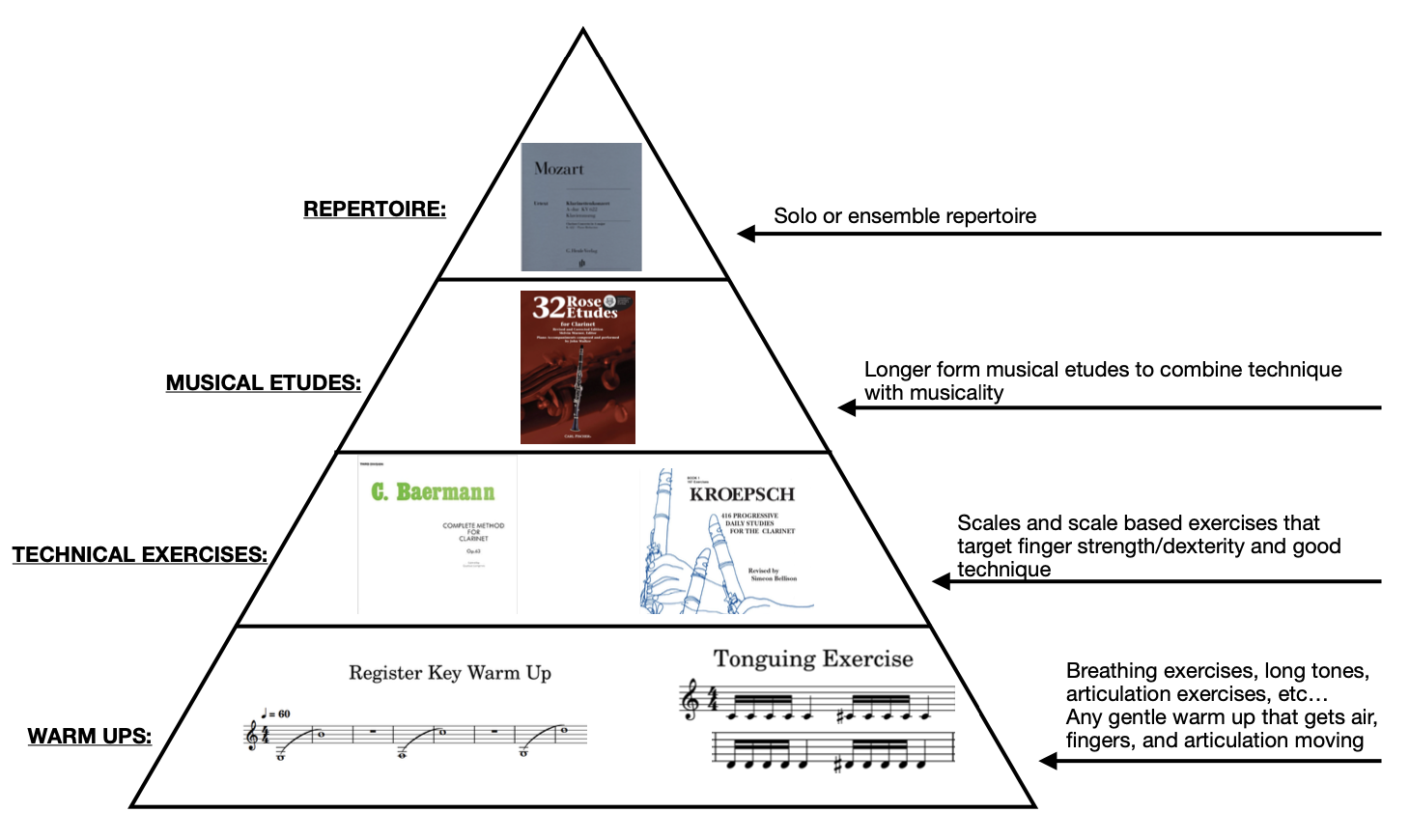
Example of a clarinet practice pyramid with warm-ups, technique, and repertoire
Download the Blank Template
Use this template to create your own practice routine based on your level and goals.
Download the Blank Clarinet Practice Pyramid PDF
Inside this PDF you will find a simple, customizable practice structure, space to plan your daily routine, and atool to stay consistent and organized.
How to Use This in Your Own Practice
If you’re a beginner, your practice pyramid might look like:
More time on warm-ups and fundamentals
Shorter technique and repertoire sections
If you’re more advanced:
Your pyramid may become more balanced
You may spend more time on repertoire and refinement
The key is to adjust the pyramid based on your level and goals while always keeping a strong foundation.
Final Thoughts
A well-structured practice session doesn’t have to be complicated—but it does need to be intentional.
By using a practice pyramid, you can:
Stay focused
Make better use of your time
Build strong, consistent habits
Even practicing for a short amount of time each day becomes far more effective when you know exactly what you’re working toward.
Ready to organize your practice? Download the Practice Pyramid PDF here
If you’re looking for more guidance on building strong practice habits or want personalized support, feel free to reach out about private clarinet lessons. A clear plan and expert feedback can make all the difference in a student’s progress.