Common Beginner Clarinet Mistakes (and How to Fix Them)
Starting the clarinet is exciting, but let’s be honest, it can also feel frustrating at times. If you’re dealing with squeaks, slow fingers, or even discomfort while playing, you’re not alone. Most beginners run into the same few issues, and the good news is they’re all fixable.
Here are three of the most common beginner clarinet mistakes and exactly how to correct them.
1. Not Covering the Tone Holes Completely
The problem:
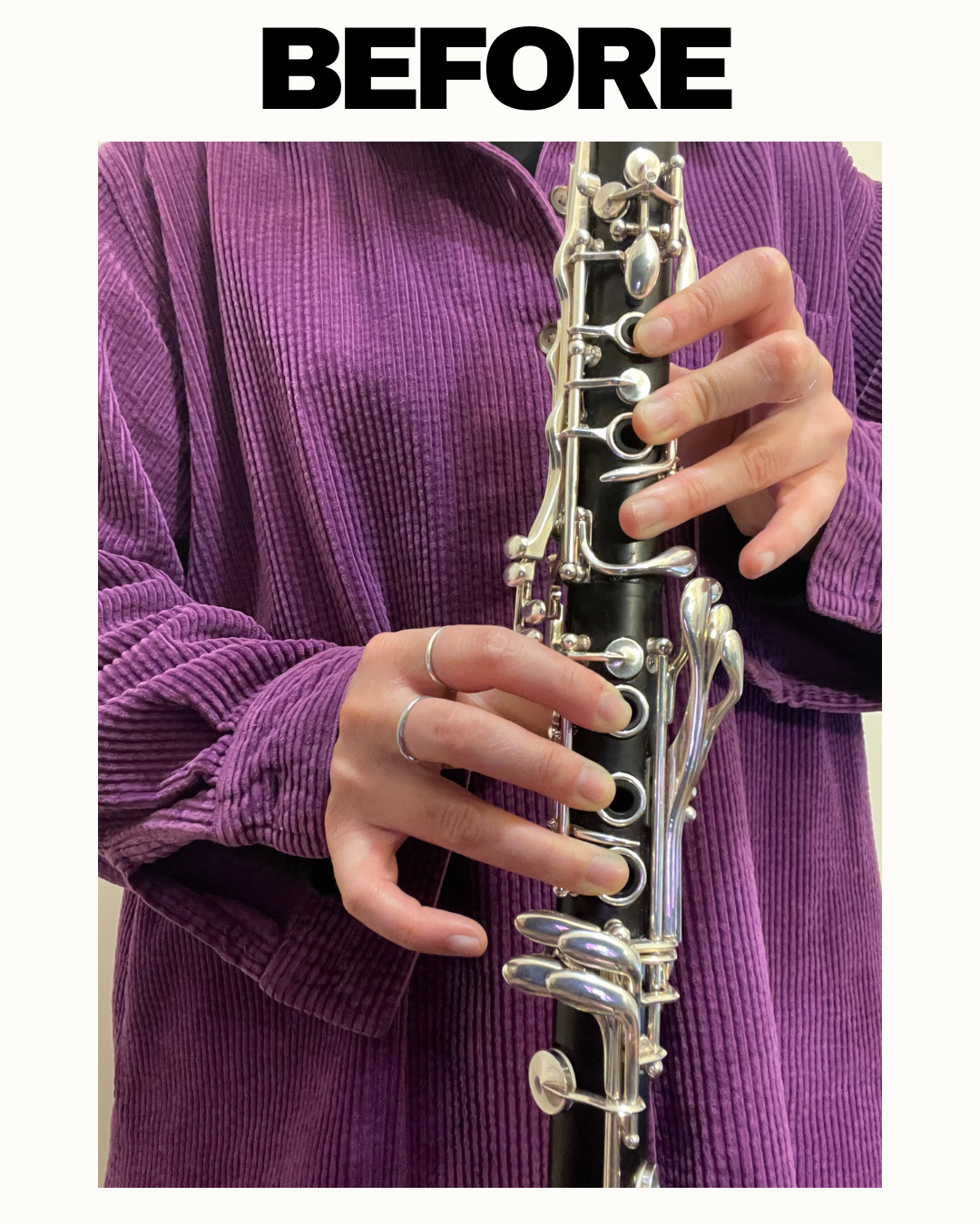
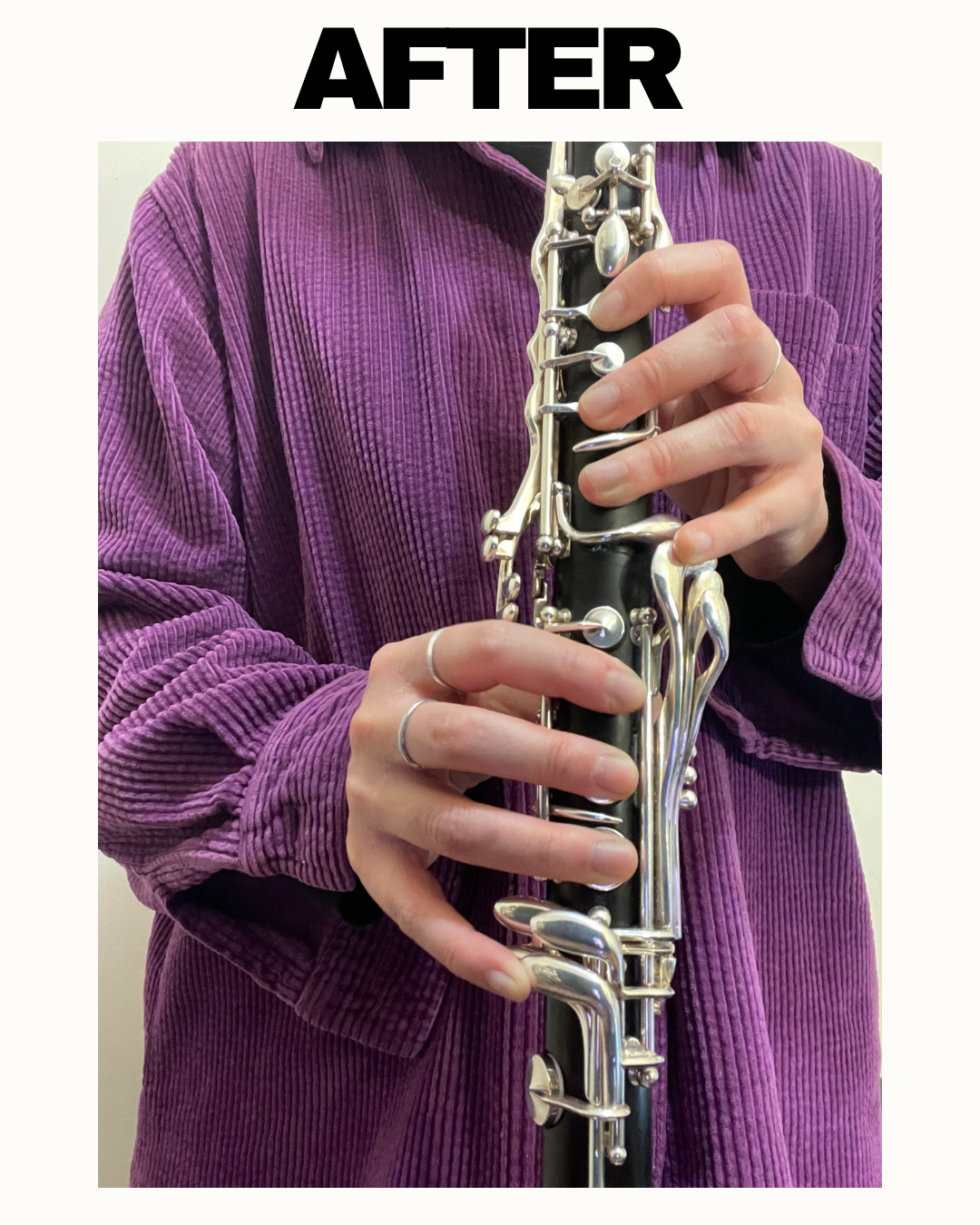
Are you squeaking? Do certain notes feel unstable or hard to produce? One of the most common causes is not fully covering the tone holes with your fingers. Even a tiny gap can cause air to leak, which leads to squeaks, thin or airy tone, and notes not speaking clearly
How to fix it:
Take a moment to play in front of a mirror.
Check that:
The pads of your fingers (not the tips) are covering the holes
You cannot see any part of the tone hole underneath your fingers
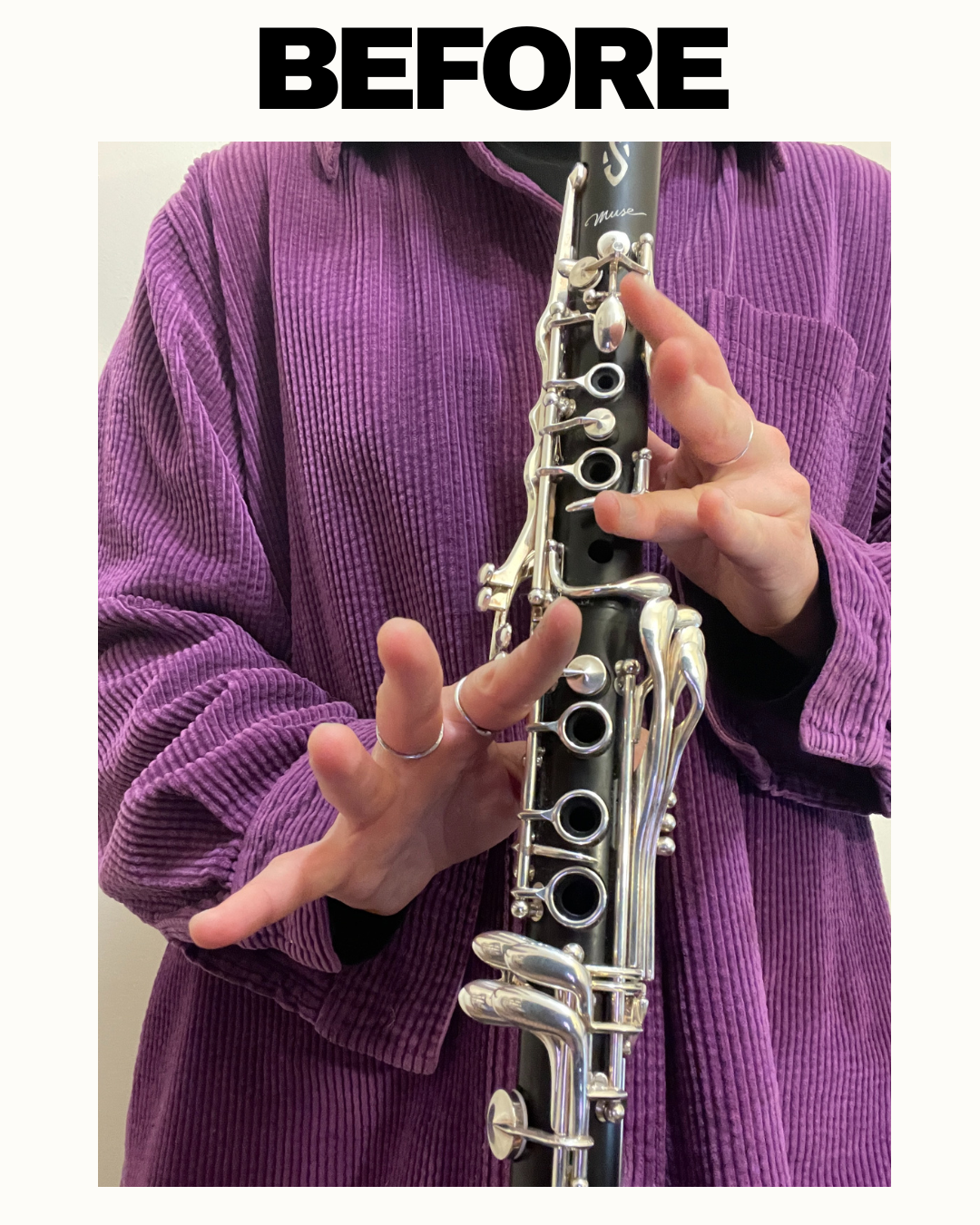
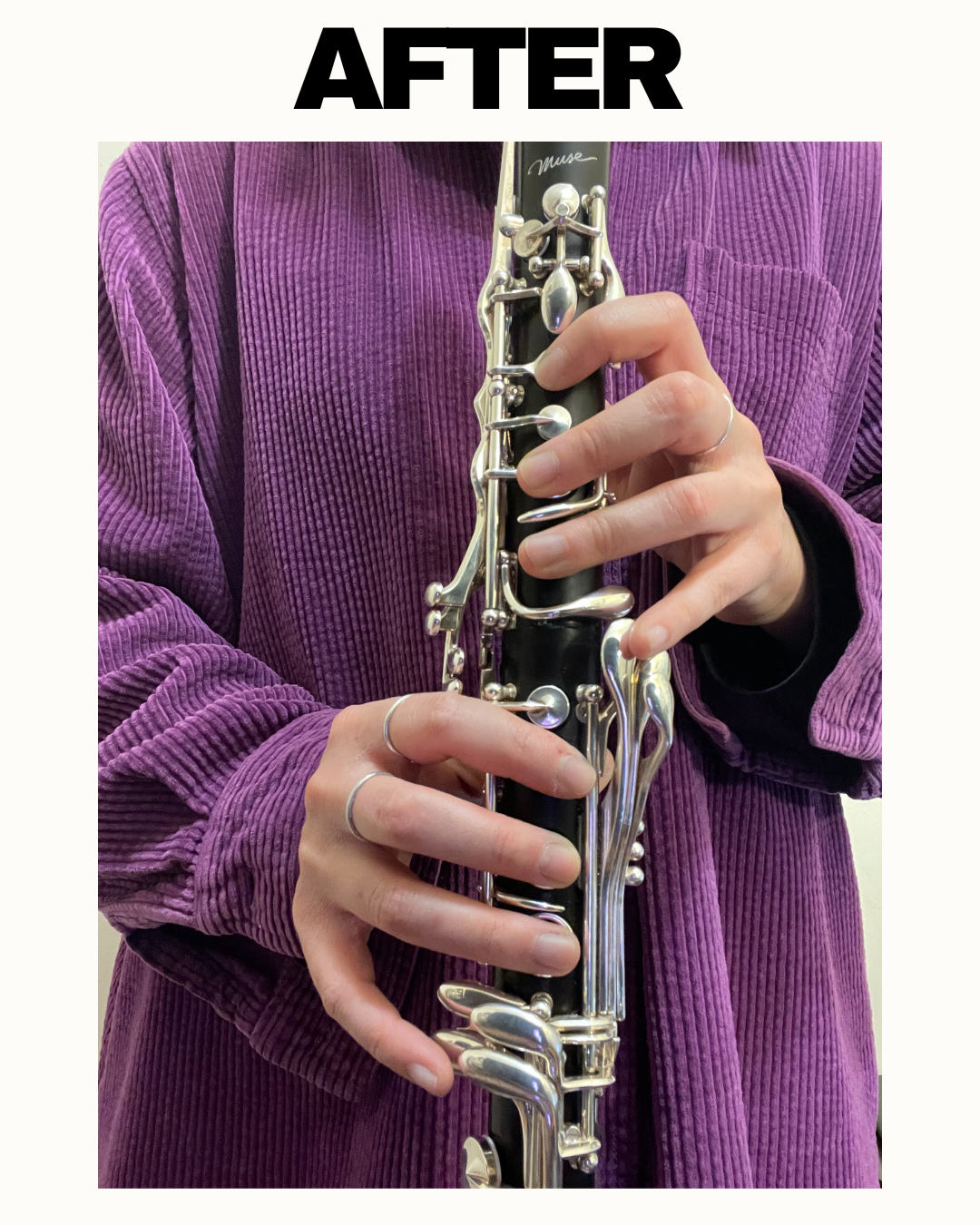
This small adjustment can make an immediate difference in your sound. Take a look at the before and after pictures below to get a visual of the correct finger placement.
2. Incorrect Right-Hand Thumb Position
The problem:
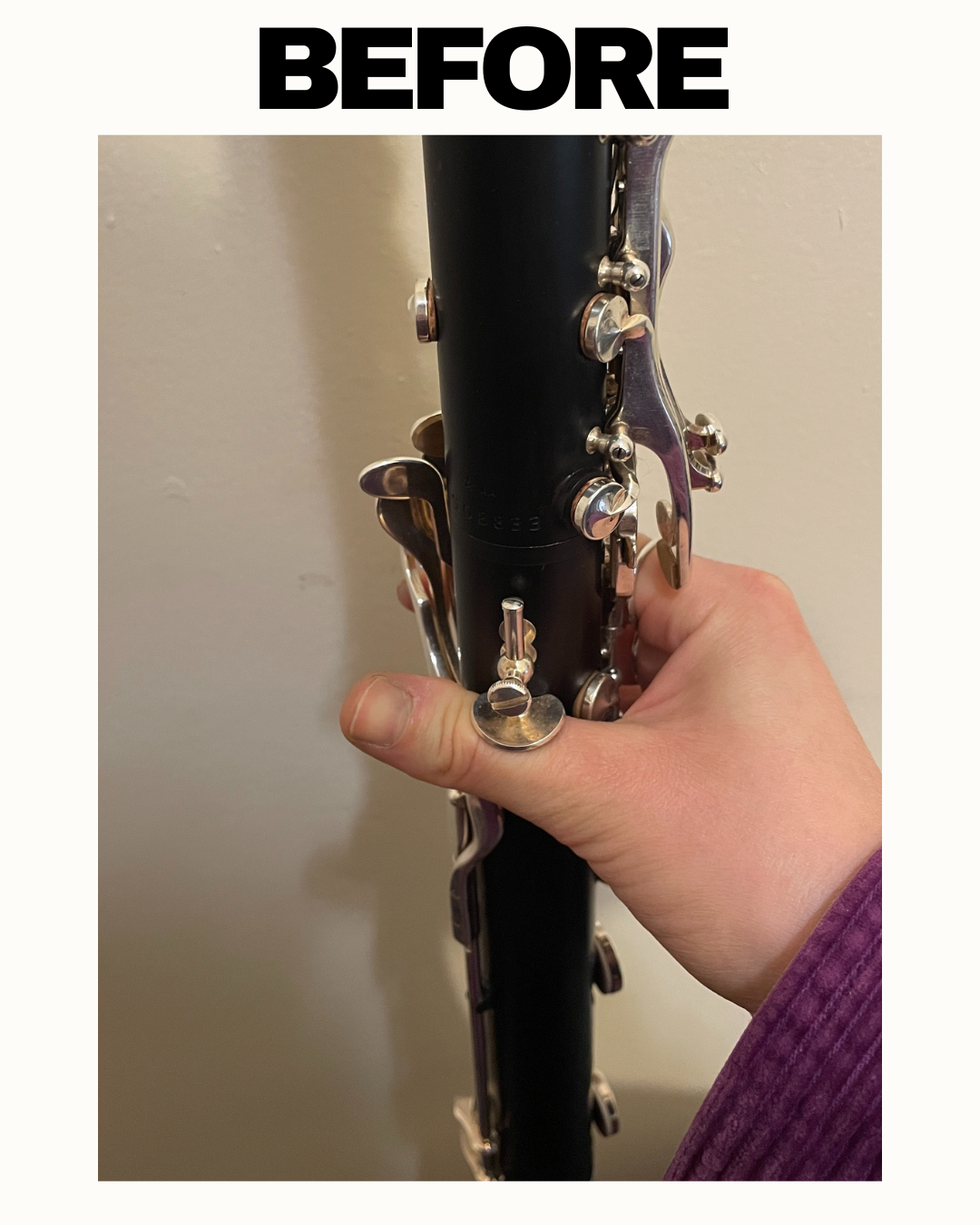
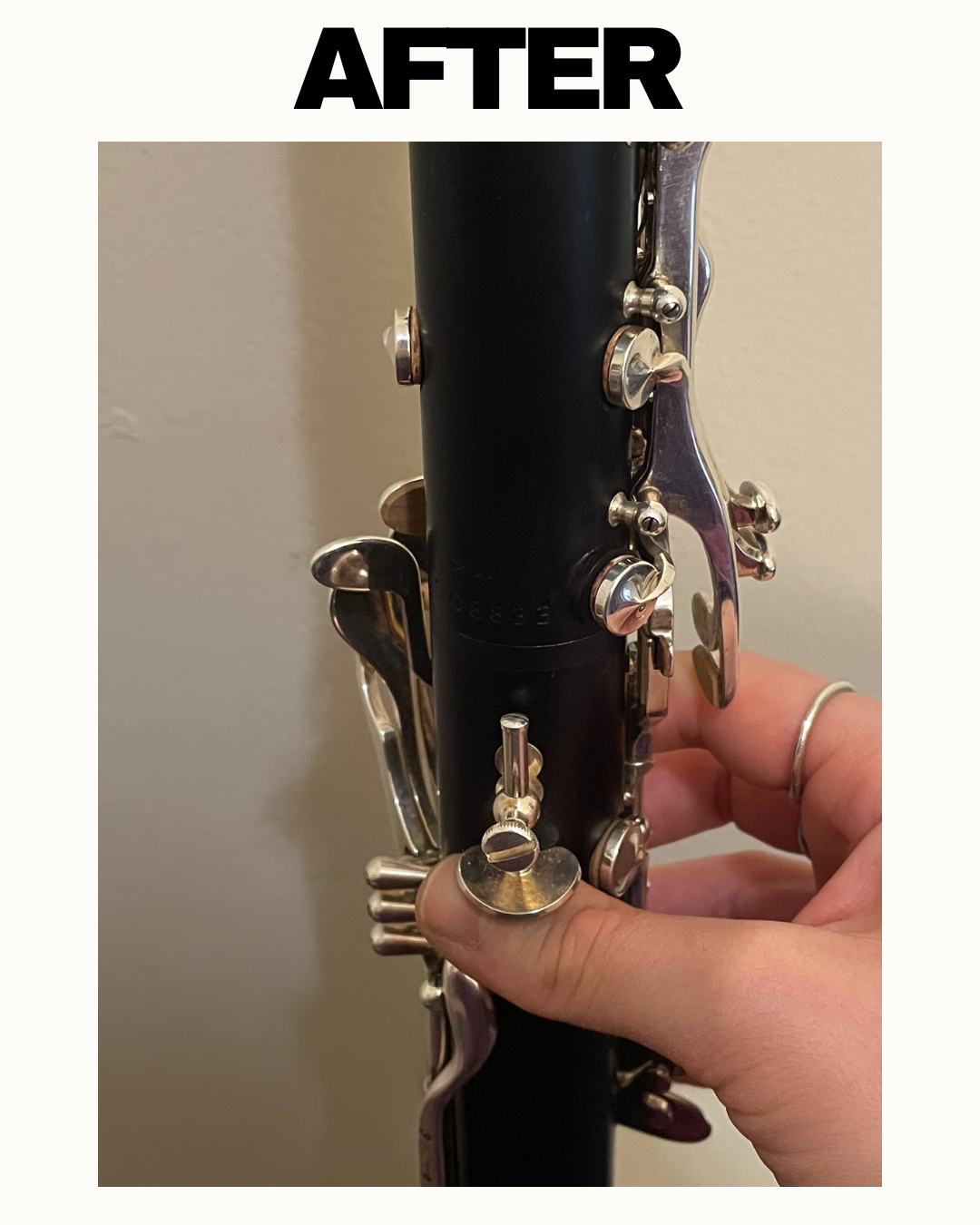
Do you feel tension or even pain in your right arm? Does it feel awkward to line your fingers up with the keys? Your thumb position might be the issue. If your thumb is too far under the thumb rest, it pushes your hand out of alignment, making everything feel harder than it should.
How to fix it:
Look at where your thumb meets the thumb rest.
The thumb rest should sit right at the corner of your thumbnail
Your hand should form a natural, relaxed “C” shape
Your fingers should fall comfortably onto the keys without stretching
This position reduces tension and improves overall control. Take a look at the before and after pictures below to get a visual of the correct finger placement.
3. Fingers Lifting Too Far from the Keys
The problem:
Do you feel like your fingers just can’t move fast enough? You might be lifting them too high off the clarinet. This creates extra motion, which slows you down, especially in faster passages.
How to fix it:
Again, a mirror is your best friend here.
Watch for:
Fingers “flying” far away from the keys
Losing alignment with the tone holes
Instead:
Keep your fingers close to the keys at all times
Think of small, efficient movements rather than big lifts
This will help you play faster, improve accuracy, and transition more smoothly when going over the break. Take a look at the before and after pictures below to get a visual of the correct finger placement.
Final Thoughts
The clarinet is all about small details adding up to big results. Fixing these three common mistakes can dramatically improve your sound, comfort, and confidence.
If you’re a parent or student working through these challenges, remember these are completely normal parts of the learning process. With a few mindful adjustments, progress can happen much faster than you think.